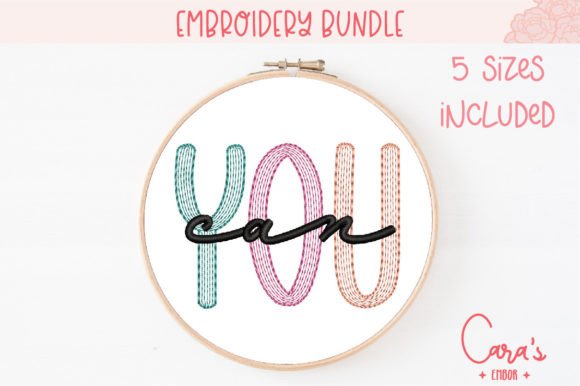
You Can: A Designer’s Review for Branded Merch
As an embroidery designer who has spent years digitizing and testing files for commercial use, I approach every new machine embroidery design with a critical eye. It is not just about whether the design looks pretty on a screen; it is about how it performs in the real world of small business merchandise. Today, I am reviewing You Can, a piece from the Friends Quotes category, to determine its viability for branded patches, custom apparel, and boutique product lines.
The premise of this design is simple yet powerful. The phrase "You Can" carries an inherent motivational weight that resonates across various industries. Whether you run a local café, a creative studio, a fitness brand, or an Etsy shop selling handmade goods, this message aligns perfectly with customer empowerment. However, the transition from a digital concept to a tangible embroidered patch or garment detail requires careful consideration of technical constraints and brand identity.
First Impressions: Visual Personality and Brand Fit
Upon initial inspection, You Can presents itself as a versatile asset. In the realm of Friends Quotes, designs often lean heavily into the playful or sentimental. However, for business use, we need something that balances warmth with professionalism. This design feels approachable and friendly, yet it possesses the structural integrity needed for commercial applications. It does not scream "novelty"; instead, it whispers "support," which is a subtle but crucial distinction for brand building.
The aesthetic suggests a modern, clean look that can adapt to both rustic and minimalist brand identities. For a bakery or florist, it adds a touch of personal encouragement to packaging. For a tech startup or co-working space, it serves as a morale-boosting element on staff uniforms. The key takeaway here is versatility. It is not overly ornate, which means it is less likely to clash with existing design assets or logo systems.
Real-World Applications for Small Business Merch
Let us discuss where this digital embroidery file truly shines. The most immediate application is in the creation of embroidered patches. Patches are currently trending in the handmade market because they allow customers to customize their own items. A small, well-digitized "You Can" patch can be sold as a standalone product or added to tote bags, denim jackets, and laptop sleeves as a value-added bonus.
In the context of custom apparel, this design works exceptionally well as a chest logo accent or a sleeve detail. Imagine a yoga studio offering branded hoodies; placing this phrase near the cuff or over the heart creates an intimate connection with the wearer. For service industries, such as coffee shops or boutiques, consider apron embroidery. Staff wearing aprons with subtle, encouraging messaging project a welcoming atmosphere that enhances customer experience.
Another lucrative avenue is cap embroidery. Caps have limited real estate, so designs must be concise. "You Can" is short enough to fit comfortably on the front panel of a dad hat or trucker cap without looking cramped. This makes it an ideal candidate for event merch or employee gifts. Furthermore, using it on tote bag design prototypes can elevate a simple canvas bag into a statement piece, increasing the perceived value of the finished product.
Technical Considerations and Production Risks
While the concept is strong, the execution depends entirely on the quality of the digitization. The product description explicitly states: "Resizing or editing the design s is not recommended and the quality of the design s cannot be guaranteed if you" alter it. This is a critical warning for any professional embroiderer. We must respect the original stitch path and density.
One major concern with quote-based designs is legibility at smaller sizes. If you intend to use this on a small patch or a narrow hat brim, you must verify the stitch density and spacing. High density can cause puckering, especially on lighter fabrics like cotton tees or linen tote bags. Conversely, low density might leave gaps that reveal the fabric underneath, ruining the clean look. Always check the thread colors against your fabric choice. High contrast is essential for readability, but ensure the threads do not bleed into each other if the design features tight lettering.
Curved surfaces present another challenge. Embroidering on a cap or a rounded sleeve requires precise hooping. If the design is not centered correctly, the text may appear distorted. I recommend creating a printable mockup first to visualize placement. Additionally, consider the fabric texture. Textured materials like terrycloth or heavy canvas may require a different stabilizer approach than smooth polyesters. Always test on a scrap piece of the actual material before running a full production batch.
Enhancing Brand Identity and Customer Trust
Why choose You Can over a generic logo? Because it builds emotional equity. When a customer wears a piece of small business merch that offers encouragement, they feel a connection to the brand’s values. This fosters loyalty and trust. It transforms a transactional relationship into a relational one. For handmade brands, this alignment is vital. It signals that you care about the user’s journey, not just their wallet.
Consistency is key. If you use this design across multiple touchpoints—such as on packaging inserts, staff uniforms, and social media graphics—it reinforces your brand identity. It becomes a recognizable signature of your business. However, ensure that the style of the embroidery matches your overall aesthetic. If your brand is ultra-luxury, a casual font might undermine your positioning. If your brand is rugged and outdoor-focused, ensure the thread colors reflect earth tones rather than neon brights.
Practical Notes for the Embroidery Professional
Before you load this file into your machine, follow these steps to ensure a premium result:
- Test in Black and White: Remove color variables to check for clarity and contrast issues.
- Verify Hoop Size: Confirm the design fits within your standard hoop dimensions without excessive trimming.
- Select the Right Stabilizer: Use cut-away stabilizer for stretchy fabrics and tear-away for stable wovens to prevent distortion.
- Check Commercial Licensing: Ensure your purchase of the embroidery file includes rights for commercial use, especially if you are selling the finished items.
- Inspect Stitch Count: While not provided in the brief description, check the file metadata for stitch count to estimate production time and thread usage.
- Create Client Mockups: Show clients how the design looks on their specific garment before stitching to manage expectations.
In conclusion, You Can is a promising addition to your library of commercial embroidery assets. It offers emotional resonance and visual flexibility, making it suitable for a wide range of handmade product lines. By respecting the technical limitations regarding resizing and paying attention to fabric and stabilizer choices, you can produce high-quality merchandise that elevates your brand. Treat this design not just as decoration, but as a strategic tool for customer engagement and brand storytelling.